The Concert Etiquette Handbook
Or: Please Don’t Poop in the Pit and Other Basic Rules for Concertgoers Who Should Know Better
A satirical survival guide for live music fans, venue staff, artists, and anyone who has ever stood behind someone filming an entire concert with their flash on.
Seen something worse? Unfortunately, we believe you.
Live Music Is Beautiful. People Are Complicated.
Concerts are one of the best things humans do together.
Thousands of strangers gather in one place to sing, dance, cry, sweat, scream, and briefly believe the world is less awful than it seemed that afternoon.
Unfortunately, some of those strangers also bring giant signs, throw phones, FaceTime their cousin for two hours, argue with their partner during the encore, yell “play the old stuff” at artists with one album, and, in recent developments that concern both doctors and venue cleaners, refuse to use the bathroom.
So we made a handbook. Not a serious handbook. A necessary one.
CAN YOU ATTEND A CONCERT WITHOUT BECOMING THE PROBLEM?
Take the Stop Concert Crimes Pledge, receive your official pledge number, recruit responsible concertgoers, and climb the rankings.
It takes less time than filming an entire chorus nobody asked you to record.
Only email-verified pledges and referrals count.
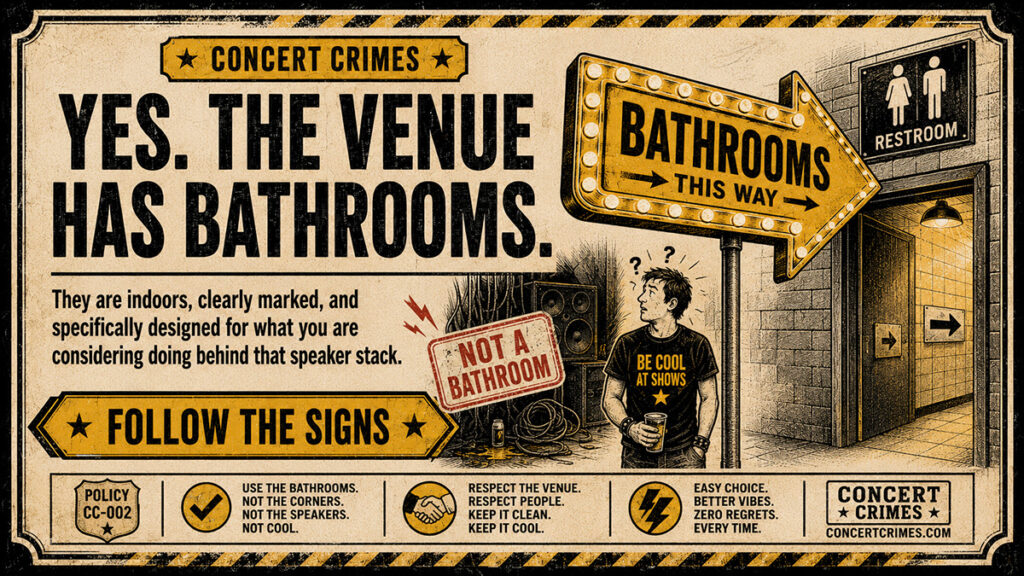
The Top 10 Official Rules
Share them with the friend group before the next show. Some people require laminated guidance.
Please Go to the Bathroom
We need to begin with a sentence that should not need to exist. Do not go to the bathroom on the floor. Do not go in a corner. Do not go against a wall. Do not go in a cup, a bag, your clothing, or any other improvised location that makes venue staff reconsider every…
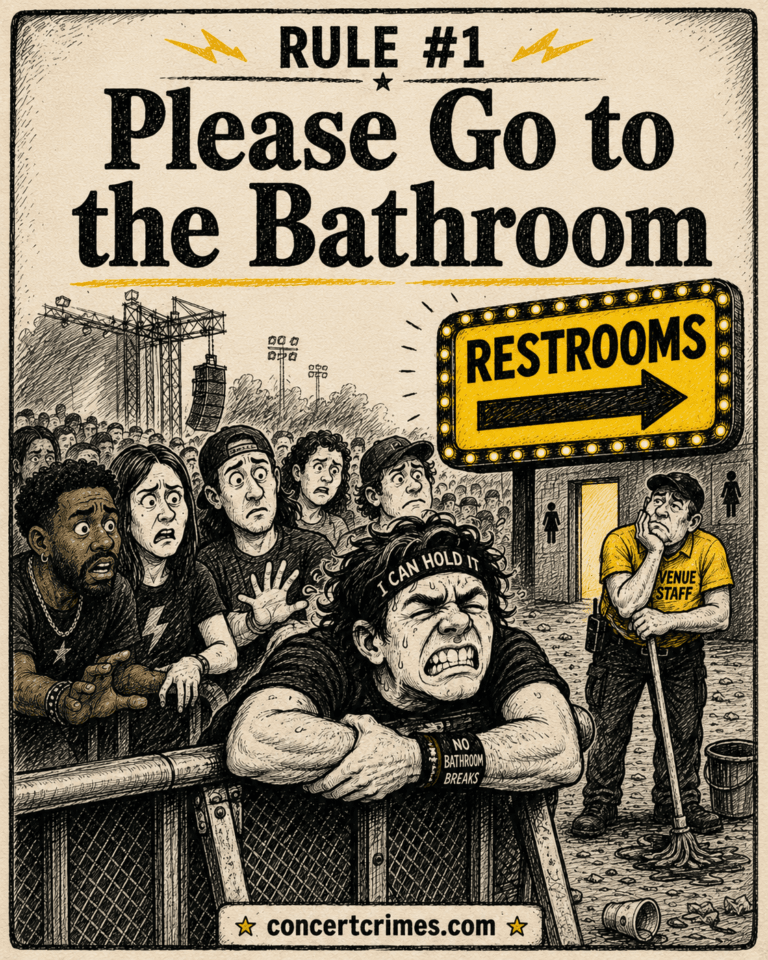
Official WarningIf venue staff need gloves, disinfectant, and a closed-door meeting because of you, the concert has gone badly.
Do Not Wear a Diaper to Protect Your Spot
Speaking of going to the bathroom somewhere appropriate, we now arrive at the adult diaper strategy. To be clear, wearing a diaper is exponentially better than using the floor or your pants. That is an extremely low bar. Medical continence products exist for people who genuinely need them. There is no shame in that, and…
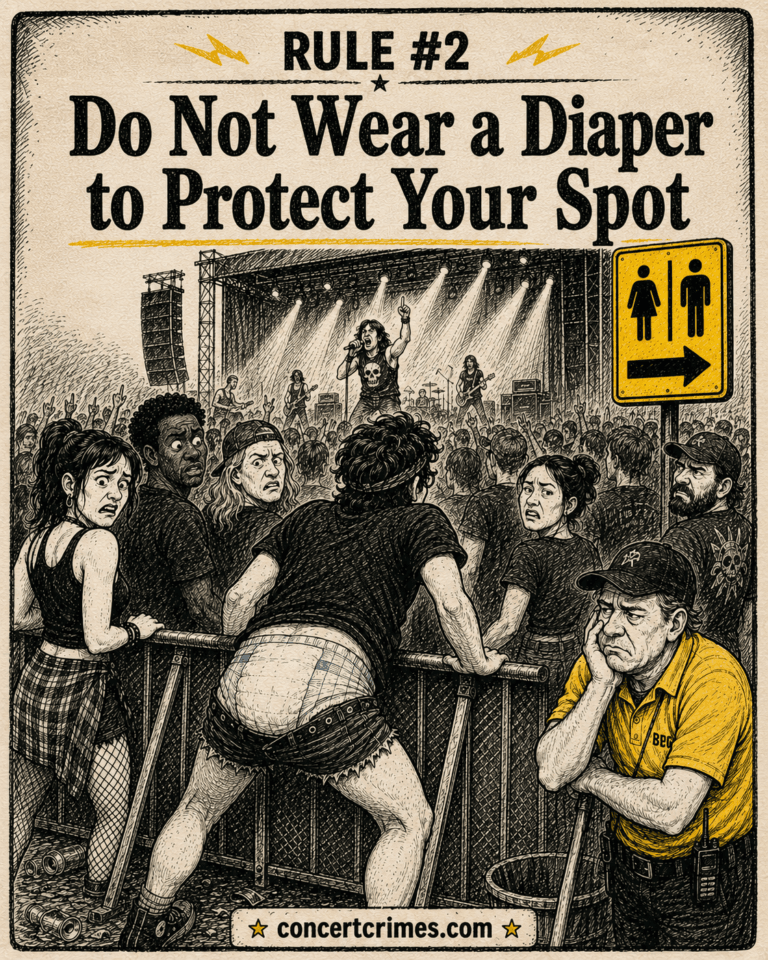
Official WarningA front-row photo lasts seconds. The memory of why you wore a diaper may arrive uninvited at every quiet moment afterward.
Do Not Grab the Performer
Being close enough to touch someone does not mean you have permission to touch them. This remains true even when the person is famous. Do not grab the performer’s hand and refuse to let go. Do not pull on their clothing. Do not wrap yourself around their arm. Do not yank them toward the crowd…
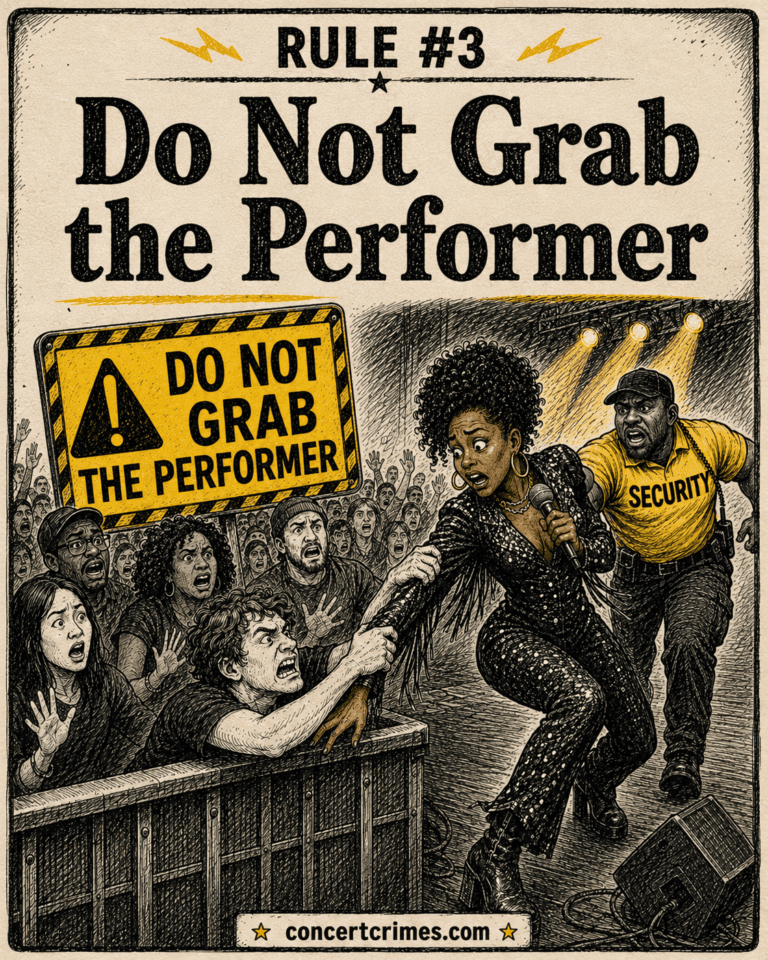
Official WarningIf the performer has to pull away from you using their full body weight, the moment was not mutual.
Your Phone Is Not the Headliner
Take a photo. Record the chorus. Capture the confetti if you must. Then put the phone down. You came to see a live performance, not to produce a vertical documentary called My Forearm at the Arena. The people behind you did not take out a small loan to watch your battery icon turn red. They…
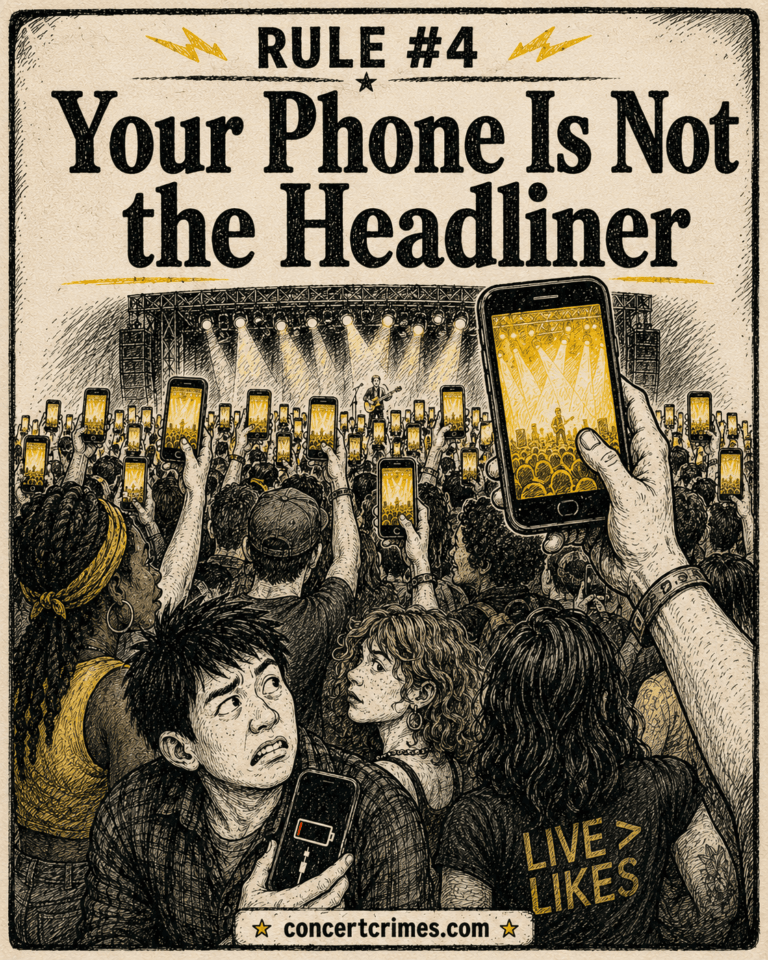
Official WarningNobody is watching your 41-minute concert video. Not even the person who filmed it.
Do Not FaceTime the Whole Show
Your friend could not attend the concert. That is unfortunate. It does not mean everyone behind you has agreed to watch your friend attend through a floating rectangle. A brief FaceTime call during one favourite song is understandable. Holding your phone above your head for the entire show while shouting, “CAN YOU HEAR IT?” every…
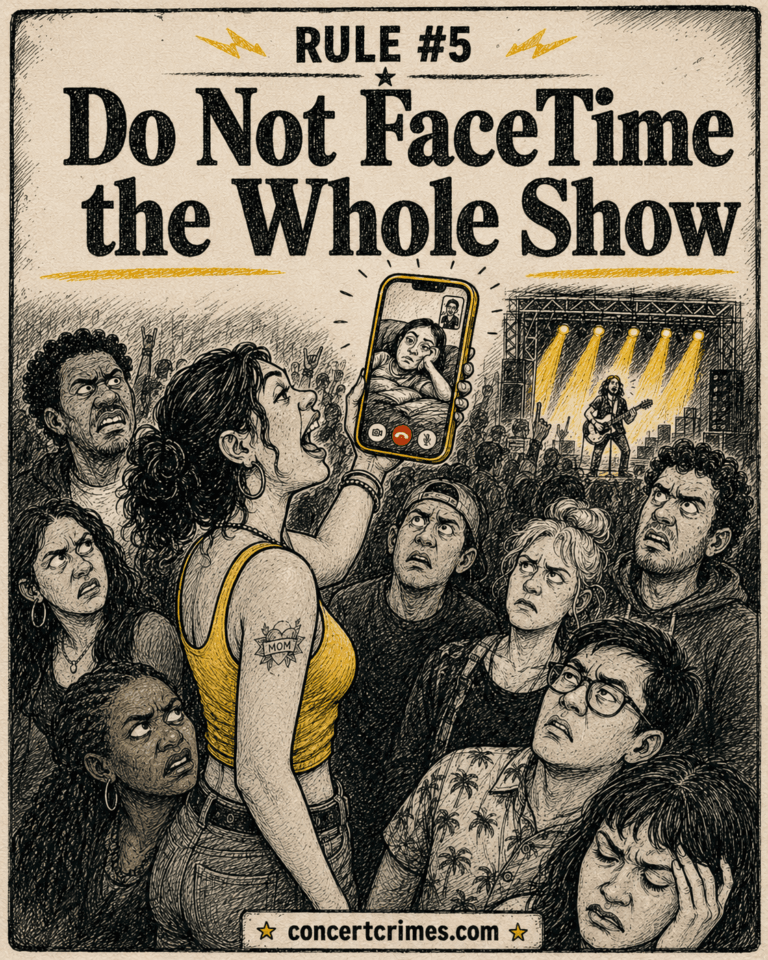
Official WarningIf the person on your screen has a better view of your face than you have of the stage, something has gone wrong.
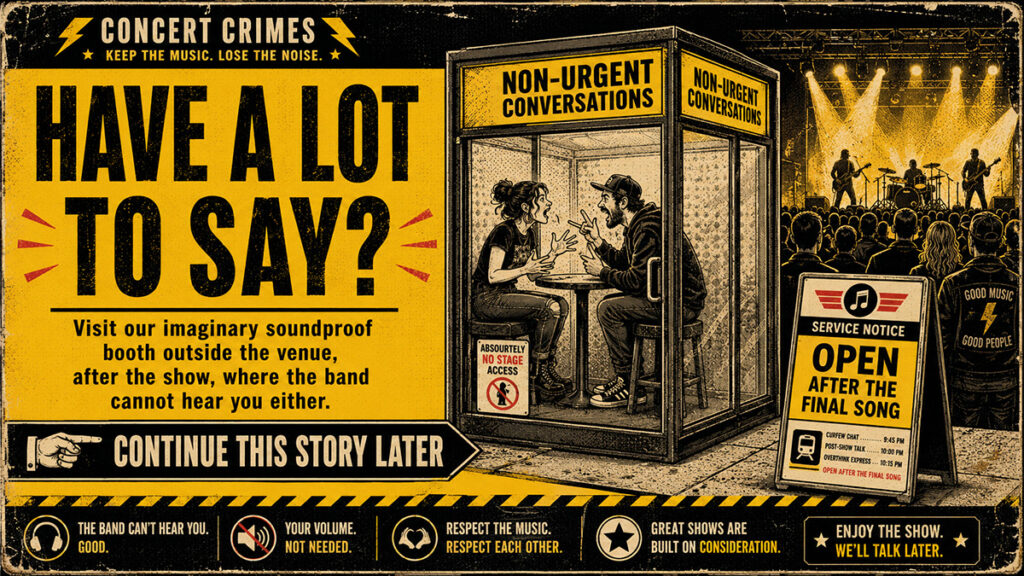
Do Not Talk Through the Show
A concert is not a loud bar with better lighting. The music is not background noise for the conversation you could have had in the parking lot, at dinner, in the lobby, or at literally any point before the opening song. Nobody needs to hear about your manager, your ex, your flight, your parking situation,…
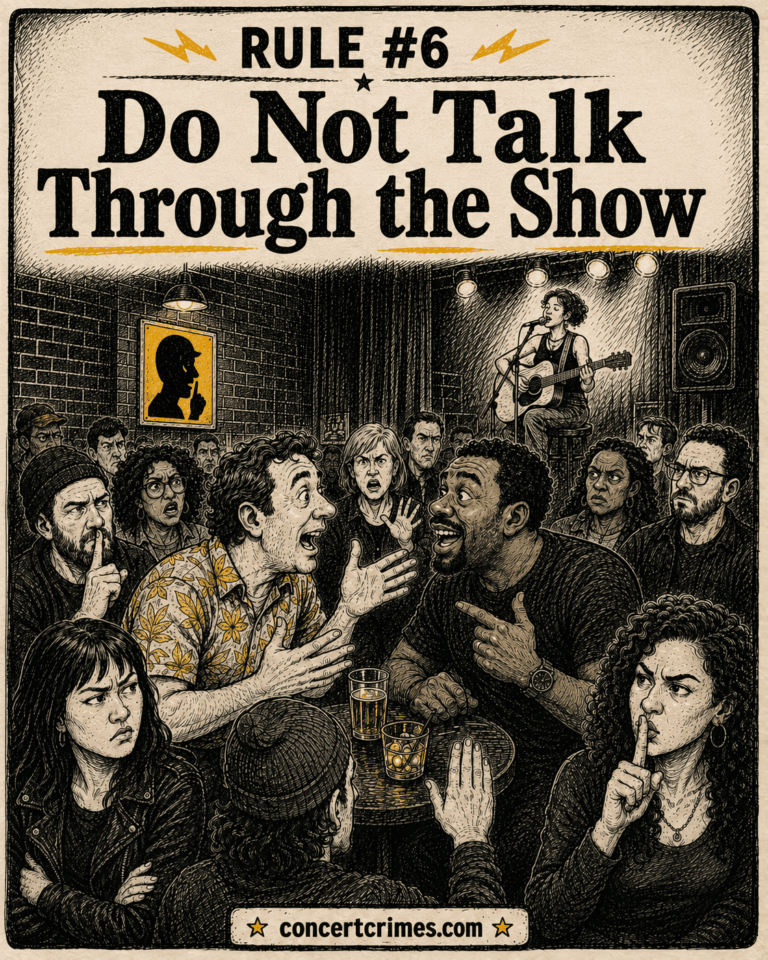
Official WarningIf strangers know more about your personal life than they do about the encore, you talked too much.
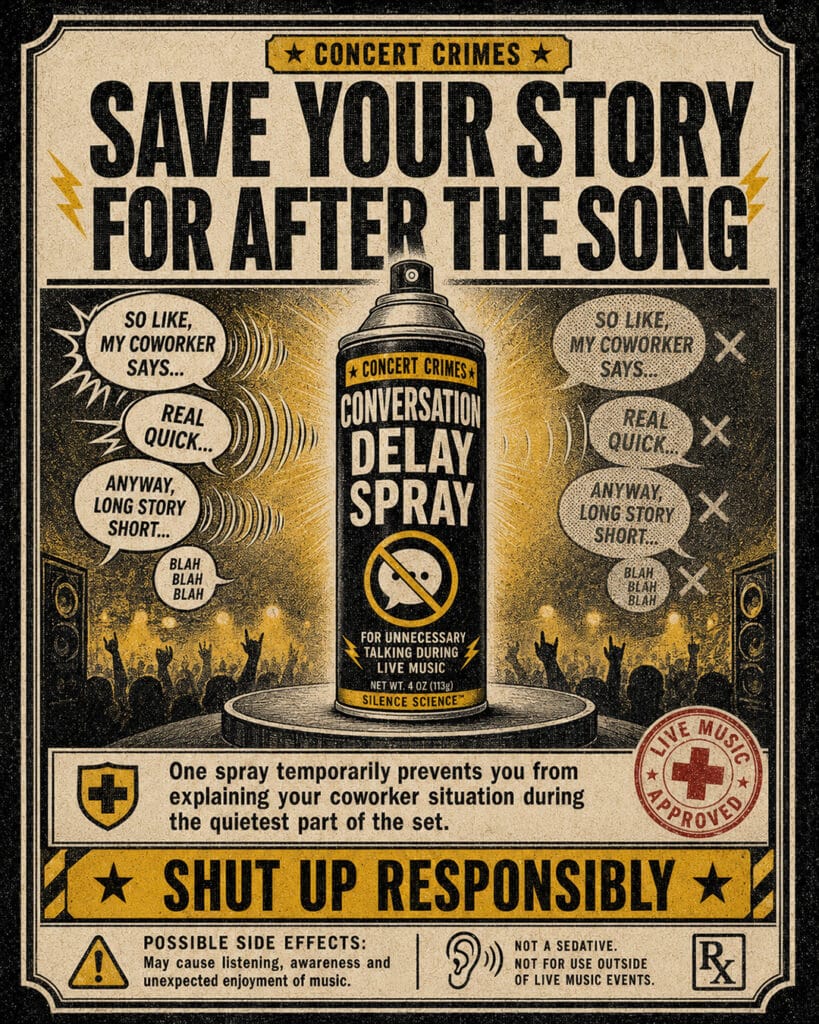
Not Every Silence Is Yours to Fill
A quiet moment at a concert is not dead air. It is there on purpose. That pause before the final chorus? Not an invitation. That emotional speech before a song about grief, heartbreak, recovery, or someone the artist lost? Probably not the ideal moment to yell, “TAKE YOUR SHIRT OFF.” There are times to scream.…
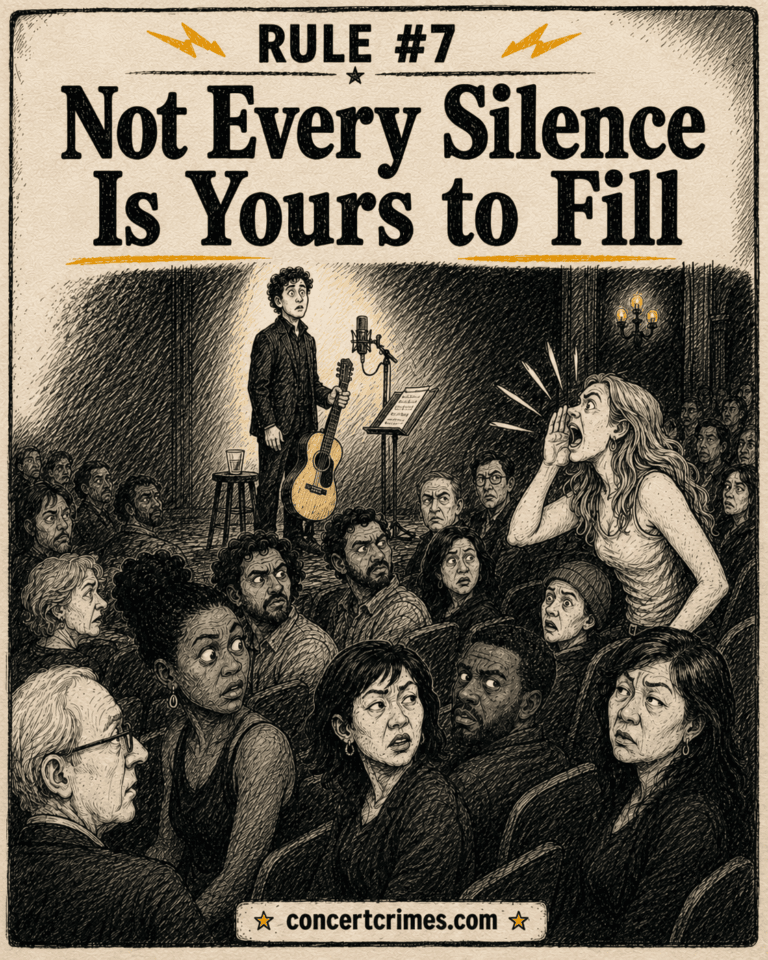
Official WarningSilence is part of the show. Your intrusive thought is not.
Do Not Demand One Song All Night
You have a favourite song. Wonderful. So do most of the people in the building. You may request it once. You may cheer when you think it is about to begin. You may experience private disappointment if it is not on the setlist. What you may not do is yell the title between every song…
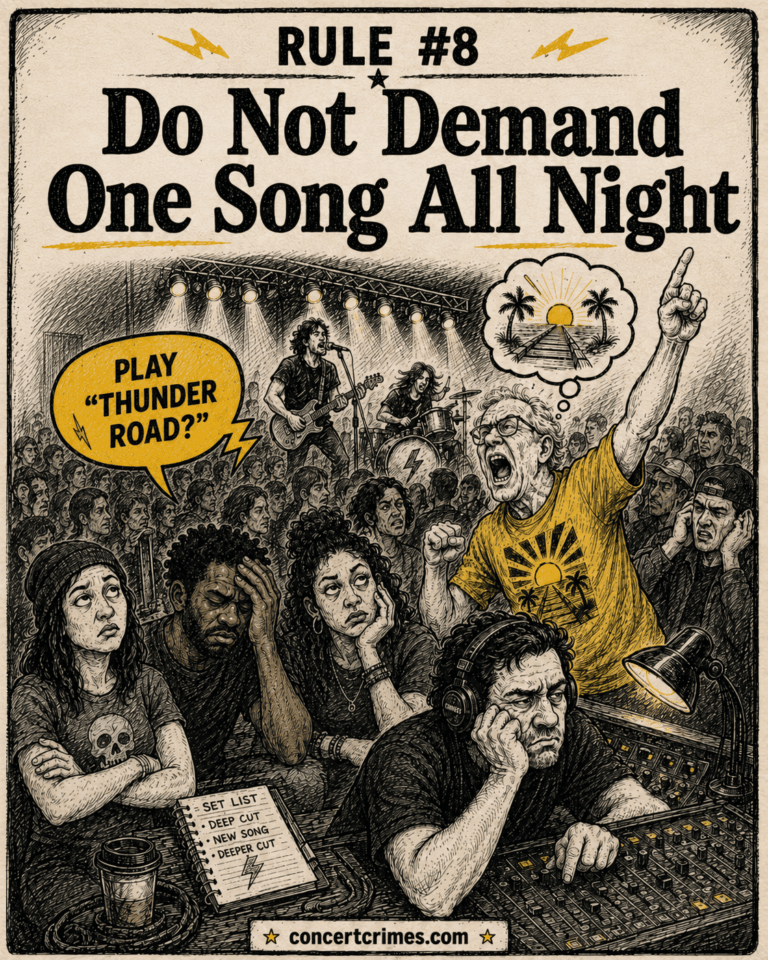
Official WarningAfter the seventh request, you are no longer asking for a song. You are becoming a sound effect.
Pick People Up
If someone falls, pick them up. This is not optional. This is not the moment to keep dancing, protect your position, finish filming, or wait for someone wearing a staff shirt to notice. Stop. Make space. Help them stand. If they are injured, alert security. If they are trying to leave the pit, let them…
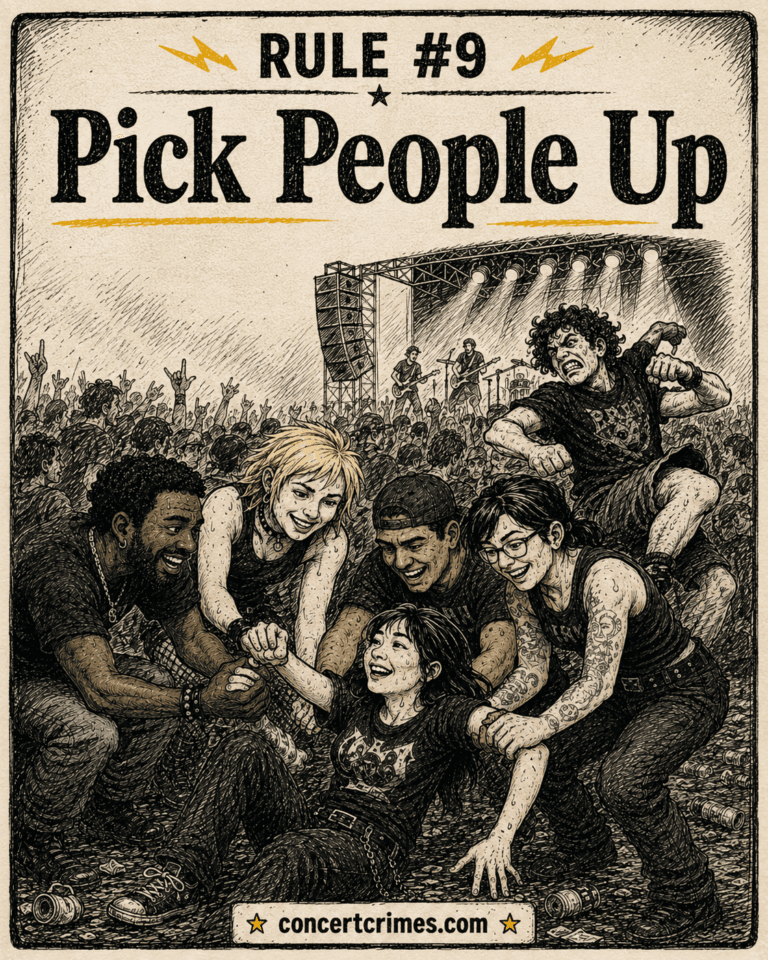
Official WarningIf someone falls and you dance over them, you are not hardcore. You are just badly raised.
A Concert Is Not a Sit-Down Meeting
Some people stand. Some people sit. Both are allowed. Standing may be painful, unsafe, inaccessible, or simply not possible. Nobody owes the section an explanation. If you are standing or dancing, enjoy yourself—but read the room. Stay in your space, protect accessibility areas, and do not spill beer, crash into the row behind you, or…
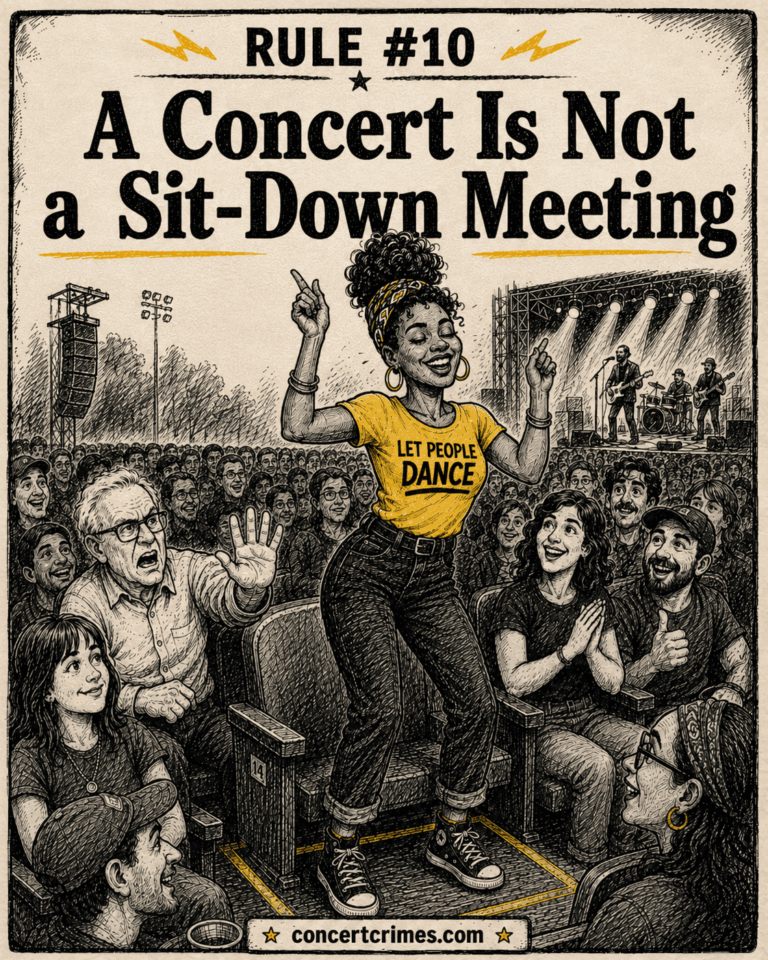
Official WarningA concert ticket guarantees a seat. It does not guarantee everyone around you will become one.
Seen Something Worse? Unfortunately, We Believe You.
Concertgoers keep discovering new and upsetting ways to behave in public. If you have witnessed a concert crime that deserves to become an official rule, submit it.
Submit a Concert Crime